Teach the Frontier
Three of the most powerful people in tech spent the last week arguing about speed and the frontier.
On September 12, Anthropic CEO Dario Amodei published "We Must Pace the Frontier." He argued that AI capabilities are advancing so quickly they need to be slowed so safety work can catch up, proposing embedded third-party evaluators inside AI companies, coordination among democratic countries on common safety standards, and broader global coordination. Buried in the essay is the line I keep coming back to: "society must have a say in how this technology is used."
Three days later, Block co-founder and former Twitter founder and CEO Jack Dorsey answered with "open the frontier." He argued that pacing rules negotiated by today's leaders could turn a temporary lead into a permanent one, and that reproducibility matters most: published evaluations and known limitations, so outsiders can challenge a lab's claims without asking permission. He wants that openness "so people who question the developer's judgment can reproduce results."
Then Meta CEO Mark Zuckerberg weighed in. He said every lab already has the responsibility and incentive to move at a pace that lets it train models safely, and the ability to act on its own to make that happen. He pointed to Meta holding back its Muse models for months to harden them before shipping. Getting the balance right, he said, "is within our power to do."
Three VERY different answers. Of course, then everyone weighed in from all sides, as we do.
But, look closely at what they're actually arguing about. It's mostly about WHO gets to check the work and the technology's purpose.
It’s either 1) embedded evaluators, 2) reproducible open results, or 3) AI labs policing themselves.
All three positions assume that somewhere, someone has the knowledge and judgment to look at what a model produced and say, "That's wrong."
None of these essays mention kids, BUT all of them are about judgment.
Let’s be real. We can't pace the frontier from a classroom, and we probably can't open it from the kitchen table (yet).
But we can teach it, and that might matter more than any of the three proposals, because the evaluators, engineers, voters, and skeptics of 2040 are sitting in our schools right now.
So what does teaching the frontier actually look like?
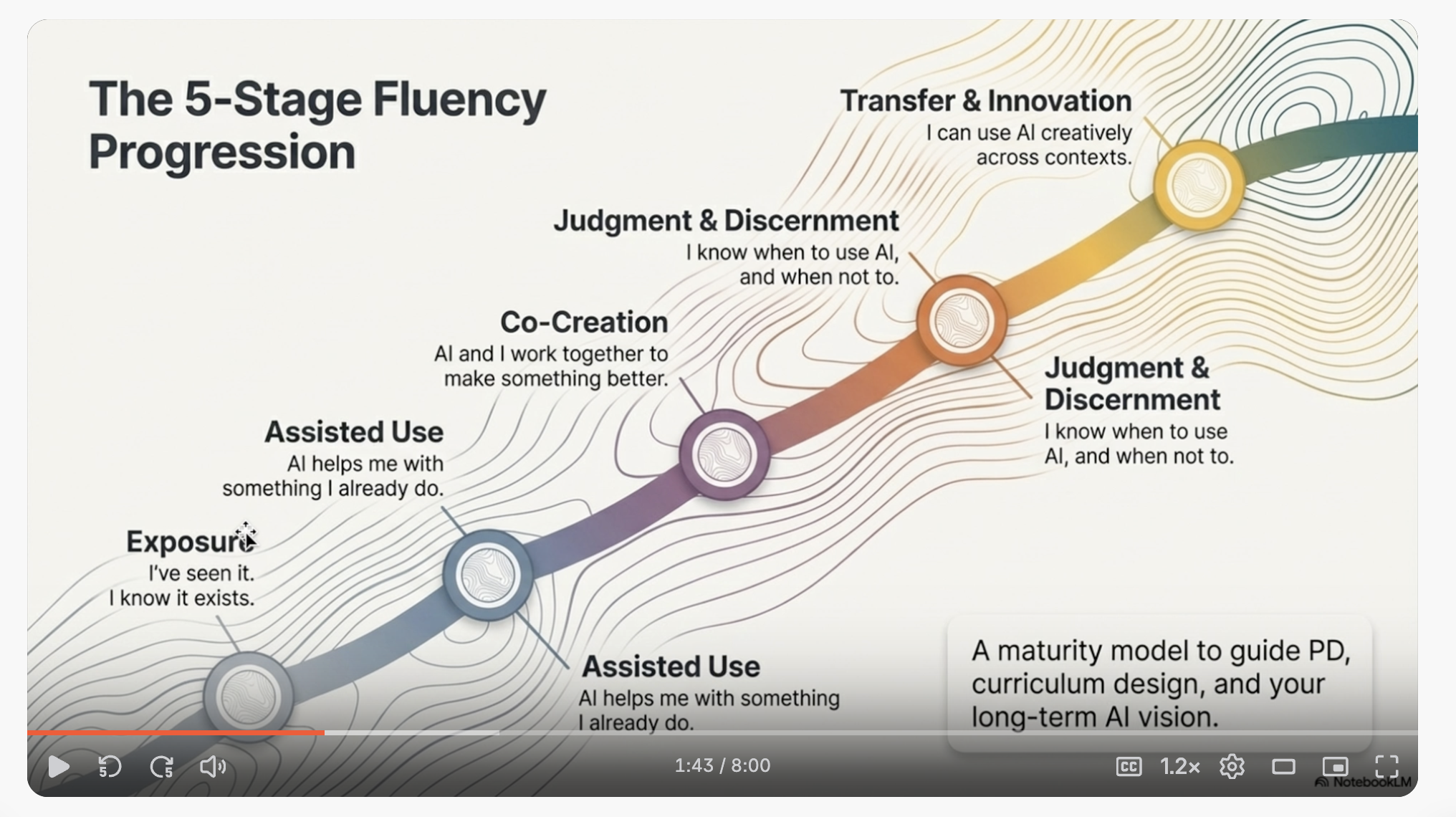
Build the knowledge anyway. Fluency is about knowing WAY more than which buttons to push... A kid can't catch a wrong answer about the causes of World War I if they don't know the causes of World War I. Judgment ALWAYS sits on top of knowledge and experience. The more capable these tools get, the more background knowledge matters, not less.
Make them the evaluator. Dorsey's case for reproducibility is really a classroom strategy for all of us. In my AI & Emerging Tech Course that I’m teaching right now, we learn this in a few ways. First, I’ll hand students AI output and make them audit it. Then, we will run the prompt again and compare, ultimately finding the errors or issues. At home, the easier version is one question: "How would you know if it was wrong?" I ask it every time with my kids, in the hope that they eventually start asking it themselves.
Pace the tool to the learner. Amodei's core argument is that capability shouldn't outrun our ability to understand it. I know he doesn’t realize this, but hat's also a pretty good description of child development. Most tasks should be AI-free, and kids deserve to know why (on both sides). We want to continue to assign the hard part to the actual human. Build PRODUCTIVE STRUGGLE. Stop the COGNITIVE OFFLOADING.
Teach the argument itself. I am putting these three essays from Amodei, Dorsey, and Zuckerberg in front of my high schoolers. The three perspectives all have a reason behind the written piece.
Critics have called pacing a moat for incumbents. Amodie’s “pacing” actually helps his company…
Open weights has its own champions with their own interests. Dorsey doesn’t need to make money like the big labs do…
Zuckerberg's "trust us" has a business model behind it.
So, what should my students be looking for? Well, asking "who benefits from this argument?" is the heart of discernment, and it's a skill that transfers far beyond AI.
I’ll end with the thing that really gets me as a teacher and a dad. Amodei is right that society must have a say. Our kids (and all of us) ARE that society.