Why Students Need Structure (and Variety) For High Engagement
This is an excerpt from my latest book, The 27 Principles of Engagement (you can get the free audio book here).
Principle 26: Rituals Create Stability; Variety Creates Energy
Engagement thrives in the tension between stability and surprise.
Too much structure, and classrooms feel rigid, predictable, and ultimately lifeless. Too much novelty, and classrooms feel chaotic, unstable, exhausting. I’m reminded of this chart:
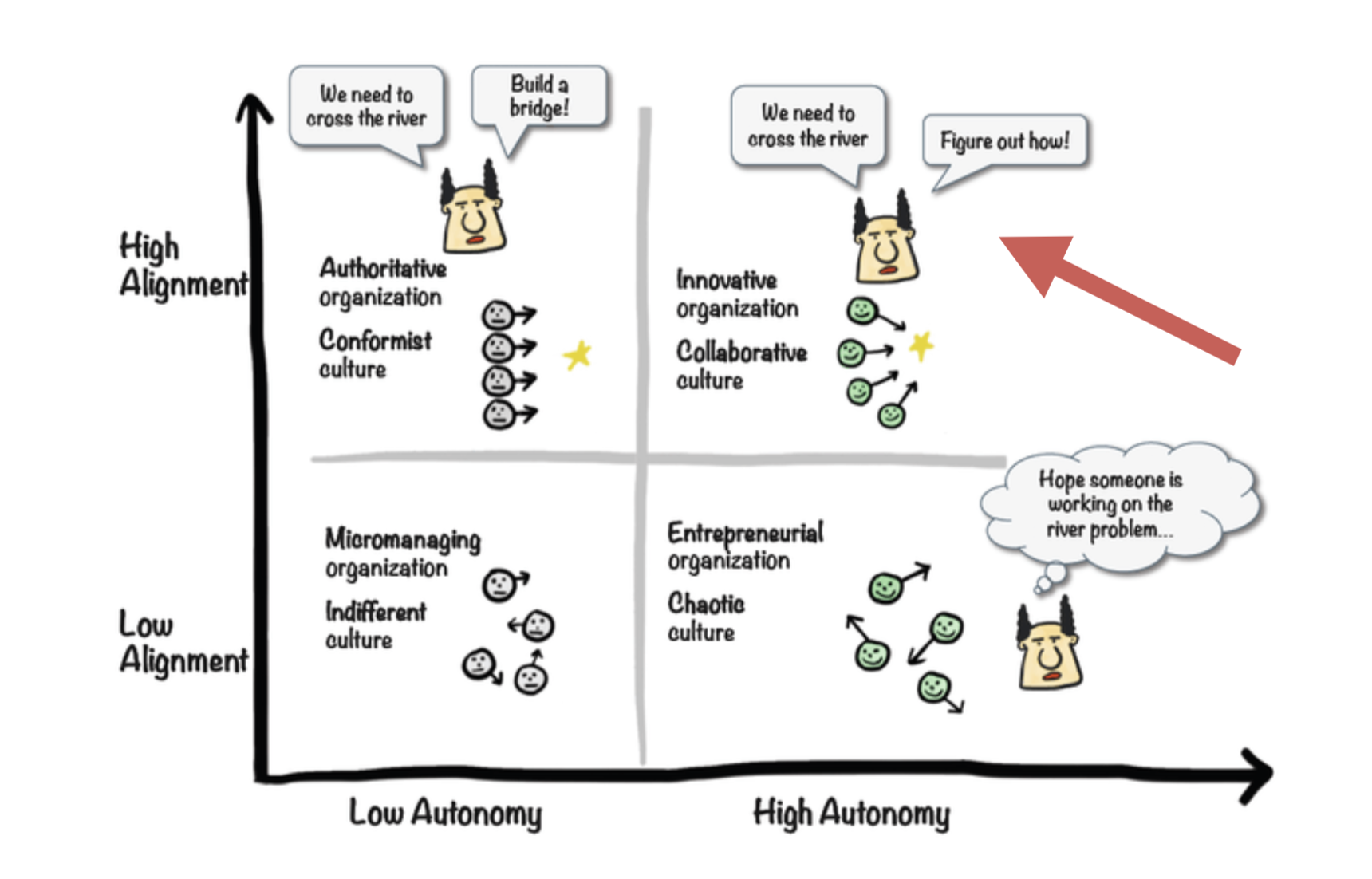
Students need both alignment and autonomy. They thrive on rituals that ground them and variety that sparks them. Rituals provide the comfort of knowing what to expect, while the variety provides the thrill of not always knowing what might come next.
Teachers who master this balance create classrooms where students feel both secure and alive.
Maya Lin: Designing Rituals of Memory
In 1982, a young architecture student named Maya Lin stunned the nation with her winning design for the Vietnam Veterans Memorial. Unlike traditional monuments filled with statues or grand arches, Lin’s memorial was a long, descending wall of black granite inscribed with the names of more than 58,000 soldiers who died in Vietnam.
Her design sparked controversy at first because it seemed too stark and too unconventional. But Lin understood the deep power of ritual. She envisioned visitors walking the wall, tracing the etched names with their fingers, and leaving mementos like flowers, medals, letters at its base. The structure created a predictable rhythm to the memorial where folks would enter, descend, reflect, and then finally leave. These rituals gave visitors a sense of grounding in grief and remembrance.
At the same time, no two visits to the wall are ever the same. The angle of sunlight shifts with the hour. The reflection of the sky and visitors’ faces changes with the season. Each personal act of tracing a name, kneeling, leaving an offering adds variety to the experience. The wall is stable in its form, yet alive in its meaning.
Lin’s memorial embodies the principle: rituals provide stability, variety keeps the experience fresh. Teachers, like Lin, can design learning environments where routines ground students but variety keeps engagement alive.
Japanese Lesson Study: Rituals of Design, Variety in Practice
In Japan, a practice known as jugyō kenkyū, or Lesson Study, illustrates the same principle at the classroom level. Teachers collaboratively design lessons, then observe, analyze, and refine them. Over time, this process has created a culture of stable routines in classrooms across the country.
Students know the general flow. Typically a problem is presented, discussion follows, students attempt solutions, and the teacher facilitates reflection. The ritual structure gives predictability. Every student understands the rhythm of a lesson, reducing anxiety and creating shared expectations.
But within that ritual, variety emerges. Teachers continually refine problems to spark new thinking. A math teacher may use a familiar format but swap in a surprising context like using train schedules, origami folds, or cooking recipes to frame equations. The ritual of the lesson anchors the class, but the adding of variety keeps engagement high.
Researchers who study Japanese classrooms note that this combination produces both comfort and curiosity. Students lean into challenges because they know the structure will hold. The rituals provide stability, and the subtle shifts provide energy.
Practical Applications In Our Classrooms
Morning Routines. In a fifth-grade classroom, students begin each day with the same ritual: a journal entry responding to a prompt, followed by a class meeting. The routine calms nerves and sets tone. But once a week, the teacher changes the format where the students respond to a picture, a video clip, or a guest question. This can happen whenever the teacher feels the need to add variety and keep it fresh.
Math Warm-Ups. A middle school teacher starts every class with a five-minute problem-solving warm up. Students know the pattern. They solve individually, discuss with a partner, share out. The predictability creates comfort. Yet the problems vary wildly, from puzzles to real-world scenarios, so the energy never fades.
Reading Circles. In a high school English class, students always begin by reading aloud in small groups. The daily process ensures accountability and shared experience. But each week, the teacher varies the follow-up: sometimes dramatic performances, sometimes debates, sometimes creative rewrites. The variety sparks deeper engagement in the midst of the same structure.
Science Labs. A biology teacher establishes a structure for labs that may follow a hypothesis, procedure, experiment, reflection path (or something more aligned to NGSS). Students know the flow and feel secure. But the teacher injects variety through unexpected twists like altered variables, mystery samples, or surprise outcomes. Students trust the process (yes, I’m a Sixers fan) and delight in the novelty.
Reflection Circles. An elementary teacher ends each day with a reflection circle, where students share one success. But on Fridays, she adds variety: students share a challenge, a failed attempt, or a question for next week, or gratitude for a peer. The routine creates stability but the rotation adds energy towards the end of the week.
Across all these stories, the balance is what works. Predictability reduces stress, and variety keeps engagement alive.
What You Can Do Right Now ->
Anchor with Rituals/Structures. Establish predictable starts (warm-ups, greetings, agendas) and endings (reflections, exit tickets, celebrations).
Layer in Variety. Rotate activities, introduce new contexts, or add occasional surprises within rituals.
Weekly Rhythms. Use consistent weekly patterns (Monday journals, Wednesday debates, Friday showcases) with varied content.
Micro-Rituals. Create small, reliable habits, like “think-pair-share” or quick writes, that give structure in any lesson.
Seasonal Surprises. Break routines intentionally at certain points with unexpected performance tasks, guest speakers, or outdoor classes.
Ritual and variety do not compete, in a learning experience they actually complement.
But What About…
There are dangers on both sides. Too much ritual becomes rigidity. Students disengage when every day feels identical, when routines suffocate curiosity. Too much variety becomes chaos. Students flounder without anchors, unsure of expectations.
Remember the chart above. We want both alignment and autonomy. Not too much of either.
The focus should be on balance. Maya Lin’s memorial works because its ritual form is constant, but each visit feels new. Japanese classrooms work because structure is stable, yet content evolves.
Closing Thoughts
Maya Lin designed a memorial where ritual creates stability and variety creates living meaning. Japanese Lesson Study shows that classrooms thrive on the same balance. Both remind us that students flourish when learning environments offer both anchors and sparks.
For teachers, this principle is practical wisdom: establish rituals that provide security, then layer variety that excites. Too much of either tips the scale; balance brings engagement.
Beyond school, the same truth applies. Families thrive on rituals like meals together but cherish variety in vacations. Workplaces need reliable processes but also innovation. Communities rely on traditions but are energized by change.
Stability comforts. Variety excites. Engagement lives in the rhythm between the two.